Yep I do have a tiny crush on fabrics, fibres and textiles. And I think it is so important that we spoil our bodies by wrapping them up in comfortable, breathable and gorgeous garments. I find it frustrating and disappointing when I discover the most beautiful outfit only to realise that it is made of cheap crappy fabric. The look might fool me but the touch won’t lie. And my armpits deserve more than being hidden in a bit of plastic that makes them stink. So here’s my fibrous blog:
The big world of textiles consists of natural and synthetic fibres.
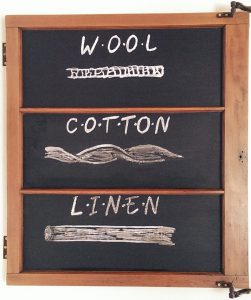
Natural fibres as you can guess come from nature. Plants or animals. They are clearly my favourites. Natural fibres breathe. I mean you can’t go wrong with wool when it is designed for nothing other than to keep a sheep toasty and warm. Or on hot days – as I said, it “breathes”. And it gives us lanolin which does beautiful things to our skin. Sadly I am one of many people who find wool a bit itchy. Well you have to imagine the fibre looking a little bit like a pine cone with lots of scales standing out. That’s why it’s itchy. But it’s also why you can make great “loden” fabric with it. Which happens to make warm and beautiful winter coats. There are of course many different types of wool and other animal hairs that are used in the textile industry. And then there is fur. Personally, not something I am very experienced with and I’m only okay with it if it’s 100% cruelty free. Animals should not suffer for fashion. If we decide to walk around in sky high heels that make our toes curl it’s self inflicted cruelty. Just leave animals alone!
Then there are the fibres we get from plants. I am pretty sure that everyone reading this has got at least half of their wardrobe filled with cotton. From the comfort and characteristic point of view it is simply awesome! But having read a bit of literature about the “not so pretty side” of cotton I am not sure that my environmentally concious heart is still as big a fan. On the bright side cotton is versatile and can be used and turned into so many things. The fibre itself is a bit dull. Just a flat boring slightly twisted band. But you stretch that band et voila you can turn it into beautiful cotton satin. If you use the short fibres you can make a hardy pair of jeans. Obviously, a lot of the different types of cotton fabrics are being created with the use of chemicals. And some careless manufacturers use bad colouring. I remember unpacking boxes filled with new clothes at an old job and the smell that attacked your nose as soon as you opened a box was so awful. They would be boxes filled with cotton t-shirts and still the smell seemed synthetic and unhealthy. I doubt that anything in the box was made from quality.
One of cotton’s cousins is linen (flax), a smooth round fibre perfect for wearing on hot days. Some people dislike the way it “scrunches” up, but I find it a rather elegant little scrunch. Recently bamboo is spoken about a lot. While it is mainly grown organically in order to produce that beautiful soft fabric chemicals are being used in the production. So I am going to file it in my category called “criss-cross”
And then there are synthetic fabrics. Synthetics are made from chemicals And you know what? They are not too bad… for some things. They are actually great for swimwear and anything elastic and many other things (especially active clothing). But I sure am glad not to have been part of the disco era when brightly printed polyesters were the thing to wear… I guess on the bright side back then the cigarette smoke at the disco would have overpowered all the body odour the clothing created. Different synthetics are made to imitate different natural fibres. Polyacrylnitrile is the wool substitute (and while it does not itch it also does not breathe…). Polyurethan is used to imitate leather. To name just a couple of the poly family… The most negative factor about synthetic fabrics is that they are made through a highly toxic and wasteful process.
And then there are – as I call them – the criss-cross fabrics. Natural fibres (cellulose from plants) that are turned into fabrics through the use of chemicals. For example Viscose. I don’t mind Viscose. And I think that it unfairly suffers from a bad reputation as many people seem to believe it’s synthetic. When really I it is actually a super clever fabric. A great way to use cotton lint (the shortest cotton fibres measuring only up to 2mm) and wasteage from the paper industry. I am all for using up every itsy bit instead of wasting it. (Yes, the part where chemicals are used is not so great). Go and get yourself a viscose top for the summer. You won’t regret it.
As mentioned above bamboo (mostly) fits into the criss-cross category as well. While bamboo deserves being described as eco-friendly for it’s fast growing ability, it’s sustainability and the fact that it can easily be grown 100% organically unfortunately in order to create that wonderfully soft and silky fibre manufacturers use chemicals in the process. (I stumbled upon a Swiss factory that apparently manufactures the fabric just like linen – chemical free. However it is my understanding that the end product is not as soft as it’s chemically manufactured friend.)
You might have struggled to read through this rather dull and boring blog. Thank you for reading and also: You’re welcome, surely you would have learnt something.
A bientot
Andrea